

Doctor-written skin guide · Johor Bahru
Scar treatment can usually begin when active acne is sufficiently controlled that new inflammatory lesions are no longer dominating the treatment area and the maintenance plan is stable. There is no universal waiting period; timing depends on acne activity, medicine history, skin-barrier condition and the proposed procedure.

Written by Dr Kenneth Lee
Medical Director, Dr Plus Aesthetic Clinic
MBBCh (Cardiff University) · GDipFP Dermatology (NUS) · LCP-certified medical practitioner
Introduction
Patients do not need to wait indefinitely to discuss scars. Scar mapping, photographs and education can begin during acne treatment. The procedural stage is timed more carefully because treatment-related injury across uncontrolled acne may complicate healing while new inflammation continues to create additional scars.
In Johor Bahru, treatment plans also need to fit a hot, humid and high-ultraviolet environment. Practical adherence, sweat, sunscreen comfort, work commitments and pigment risk can matter as much as the name of a product or device.
Key takeaways
| Key point | What it means |
|---|---|
| Discuss scars early | Assessment and planning can begin before every breakout disappears. |
| Control is the priority | Substantial active inflammation should be treated first. |
| No fixed interval | Timing is individual and procedure-specific. |
| Medicine history matters | Current and recent treatments influence preparation. |
| Maintenance continues | Preventing new acne remains important throughout scar care. |
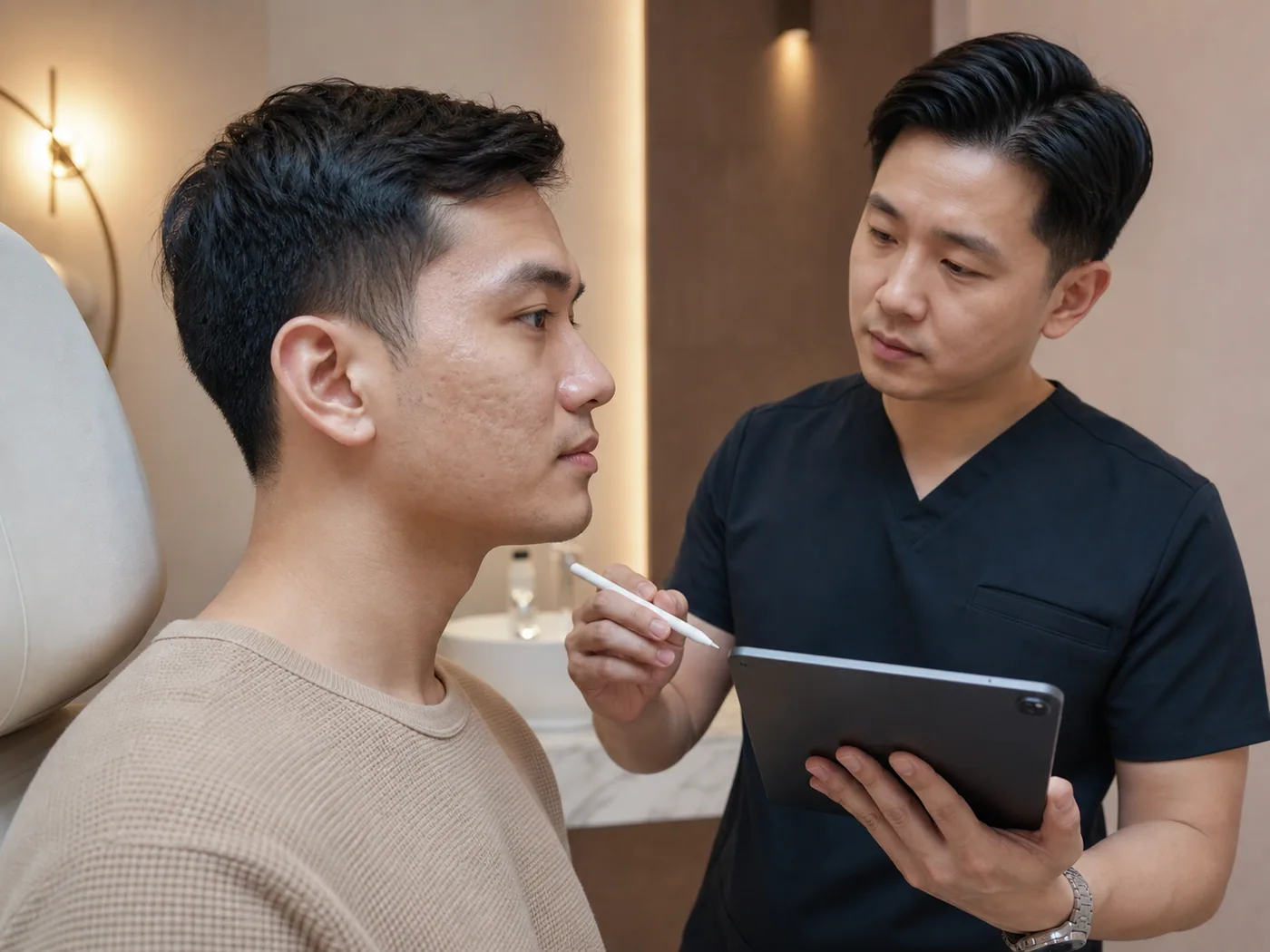
What reasonably controlled acne means
Control is judged from the trend rather than one perfect day. The doctor considers the frequency and depth of new lesions, infection, picking, scarring rate, treatment adherence and whether the skin tolerates the maintenance routine. An isolated small lesion may be different from ongoing nodules and pustules across the intended treatment field.
- Fewer new inflammatory lesions over a sustained period.
- No active infection or open picked areas in the planned procedure zone.
- A tolerated maintenance routine that reduces relapse risk.
- Clear separation between residual pigment, redness and established texture.
Evidence note: AAD states that scar treatment typically begins after acne is controlled and preventive medication is being used; NICE management aims to reduce severity, recurrence and scarring. AAD scar treatment · NICE acne guideline · DermNet acne scars · AAD acne treatment · DermNet PIH
Why assessment comes before treatment
The doctor reviews active lesions, medication, recent isotretinoin or other treatment, wound healing, PIH history, sun exposure and the planned depth of treatment before setting a date.
- Document lesion type, distribution, duration, menstrual or medicine associations where relevant, pain, scarring and the treatments already attempted.
- Review cleanser, moisturiser, sunscreen, makeup and hair products together with prescriptions, supplements, allergies and pregnancy plans where relevant.
- Examine active inflammation, comedones, nodules, pigment, redness, scarring and skin-barrier tolerance instead of treating every mark as active acne.
- Agree on a staged goal, a review interval and signs that should trigger earlier contact or referral.
Assessment is also where the doctor checks current medicines, previous procedures, pregnancy or breastfeeding where relevant, infection risk, wound-healing history, pigment tendency and the amount of recovery time a patient can realistically manage. These factors may change the treatment choice, intensity, sequence or whether treatment should be postponed.
What can happen during the transition
The period between active-acne control and scar procedures is useful rather than empty. It establishes a safer baseline.
Continue acne control
Maintain the regimen prescribed to prevent new lesions, adjusting around procedures only as directed.
Prepare pigment-prone skin
Sun protection and selected topical preparation may reduce avoidable PIH risk.
Map the scars
Classify rolling, boxcar, ice-pick, raised and pigment features so the procedure targets the right anatomy.
Choose the first stage
Prioritise tethering, surface texture or focal scars and allow recovery before adding another treatment.

Benefits, limitations and realistic expectations
Scar treatment can make selected features less noticeable, but ongoing acne can create new scars. Results are judged over remodelling time, not during swelling. Patients should expect the plan to pause or change if inflammatory acne returns.
Potential benefits
- Fewer new scars developing during procedural care.
- A clearer baseline for photographs and outcome review.
- Lower chance of treating through infection or severe irritation.
- Better sequencing of release, resurfacing and pigment care.
Important limitations
- No universal acne-free duration applies to every patient.
- Occasional breakouts can still occur during scar care.
- Medicines and procedures require individual timing decisions.
- Established scars cannot be completely erased.
No article, photograph or device name can predict an individual result. Meaningful improvement may require a sequence of care, and the safest stopping point may arrive before every visible feature has disappeared.
Safety and who may not be suitable
Do not stop prescribed acne medicine or book a procedure based on an internet waiting period. Evidence and recommendations have changed over time, and the correct interval depends on the medicine and procedure.
- Pregnancy, breastfeeding, medicines, allergies and medical conditions can change which acne treatments or procedures are appropriate.
- Active infection, significant dermatitis, open wounds or severe irritation may require treatment before a procedure is considered.
- Skin of colour may develop more persistent post-inflammatory pigmentation after irritation, picking or excessive procedural intensity.
- Prescription medicines should not be started, stopped or shared without assessment and appropriate monitoring.
Seek review for painful deep lesions, rapidly increasing inflammation, infection signs, severe medicine reactions or new scars forming despite adherence. Procedures should be postponed when the treatment area is infected or significantly irritated.
Preparation, recovery and aftercare
Keep maintenance acne care coordinated with procedural aftercare. The doctor will advise when retinoids, acids, benzoyl peroxide or other active products should pause and restart.
- Use a gentle non-alkaline cleanser, suitable moisturiser and non-comedogenic broad-spectrum sunscreen as advised.
- Avoid picking, squeezing, harsh scrubs and repeatedly adding new active ingredients when the skin is irritated.
- Follow medicine and procedure instructions consistently and record any severe or unexpected reaction.
- Attend the planned review before deciding that treatment has failed or adding another high-intensity procedure.
Follow the instructions given for your own treatment rather than copying another patient’s routine. Contact the treating clinic if recovery is more painful, prolonged or unusual than expected.
How this fits into a wider treatment plan
This timing article bridges the acne-treatment and acne-scar pillars. It keeps their intent distinct while showing patients how care moves from disease control to residual-scar correction.
This article supports the Acne Scar Treatment Johor Bahru page. That service page remains the main destination for patients evaluating care in Johor Bahru, while this guide answers the narrower question described above.
Questions to take to your consultation
A good consultation should make the decision clearer even when the answer is not immediate treatment. Ask the doctor to identify the clinical target, explain the strength of evidence and show how your skin tone, medical history and previous response affect the recommendation. The discussion should cover what improvement would be meaningful, what is unlikely to change, what alternatives exist and what would make the doctor postpone or stop treatment.
- What diagnosis or anatomical feature is the treatment intended to address?
- What evidence supports this option for my specific concern and skin type?
- What are the most relevant side effects, complications and warning symptoms?
- How much social and medical downtime should I plan for at the proposed settings?
- How will progress be measured, and when is it reasonable to decide whether another stage is worthwhile?
- What lower-intervention alternative or referral option should I understand before consenting?
Write down the answers or ask for written aftercare. Decisions are safer when the patient understands both the potential benefit and the reasons a treatment may not be recommended.
Questions patients ask
Do I need zero pimples?
Not always; the doctor judges the activity, lesion type, area and procedure.
Can scar consultation happen now?
Yes. Mapping and planning can begin while acne is being controlled.
How long after isotretinoin?
The interval is procedure-specific and should be decided by the treating clinician rather than a blanket rule.
Can I use retinoids during scar treatment?
Timing depends on the procedure and prescription; follow the doctor’s instructions.
What if one pimple appears before treatment?
Contact the clinic. One lesion may change the treatment area or timing without cancelling the entire plan.
Can peels treat active acne and marks?
Selected superficial peels may be considered, but they do not replace comprehensive acne control.
Why take baseline photos?
They help distinguish gradual remodelling from temporary swelling and lighting changes.
Can treatment begin while PIH remains?
Possibly, but pigment risk and the treatment target need separate planning.
What if acne returns later?
Maintenance may be adjusted and further scar procedures postponed until the flare settles.
Will scar treatment prevent acne?
No. Scar procedures address residual structure, not the underlying tendency to develop acne.
Conclusion
Begin discussing scars early, but start procedures when the active disease, skin barrier and maintenance plan are stable enough for safe healing. The transition is based on clinical control and procedure choice, not a universal number of acne-free weeks.
Start with a doctor-led assessment
Bring your concern, treatment history, current skincare and questions. Dr Kenneth will explain the suitable options, limitations and next steps without promising a result.
Arrange a consultationReferences
- American Academy of Dermatology: Acne scar consultation and treatment
- NICE guideline NG198: Acne vulgaris management
- DermNet: Acne scarring
- American Academy of Dermatology: Acne diagnosis and treatment
- DermNet: Postinflammatory hyperpigmentation
Medical information notice: This article provides general education and does not diagnose a condition or replace an in-person medical assessment. Treatment suitability, benefits, risks, alternatives and recovery vary between individuals.