
Doctor-written skin guide · Johor Bahru
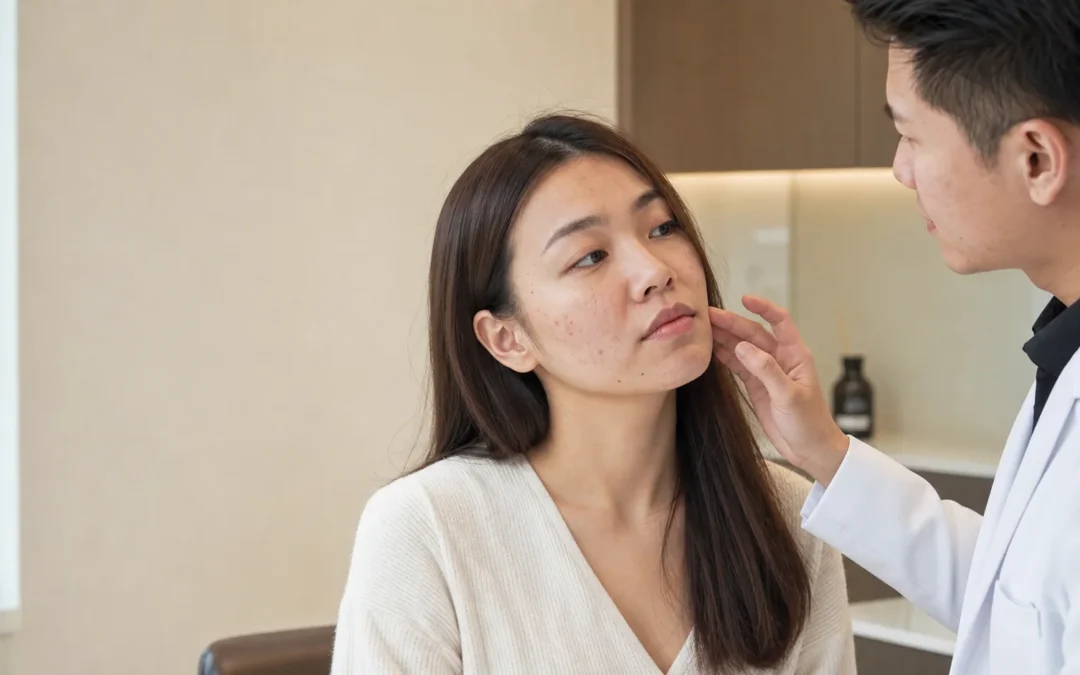
Adult acne may continue from adolescence or begin later. Hormonal fluctuation, stress, family tendency, pore-clogging products, medicines and friction can contribute, but jawline location alone does not prove a hormonal disorder. Treatment should be based on lesion type, severity, scarring and medical history.

Written by Dr Kenneth Lee
Medical Director, Dr Plus Aesthetic Clinic
MBBCh (Cardiff University) · GDipFP Dermatology (NUS) · LCP-certified medical practitioner
Introduction
Acne is not limited to teenagers. Adults may develop comedones, inflamed papules, pustules or deeper nodules across the face, jawline, chest or back. The timing can be frustrating because products that once worked may now irritate or fail. A careful history helps distinguish persistent acne from acne-like eruptions and identifies factors that can be modified safely.
In Johor Bahru, treatment plans also need to fit a hot, humid and high-ultraviolet environment. Practical adherence, sweat, sunscreen comfort, work commitments and pigment risk can matter as much as the name of a product or device.
Key takeaways
| Key point | What it means |
|---|---|
| Adult-onset or persistent | Acne may begin after adolescence or continue into later life. |
| Several contributors | Hormones, stress, products, medicines and genetics may overlap. |
| Pattern is a clue | Lower-face flares can suggest hormonal influence but are not a diagnosis. |
| Scarring matters | Painful or scar-forming acne deserves earlier medical care. |
| Treatment takes time | Consistent therapy is assessed over weeks, not after a few applications. |
Why acne can continue or begin in adulthood
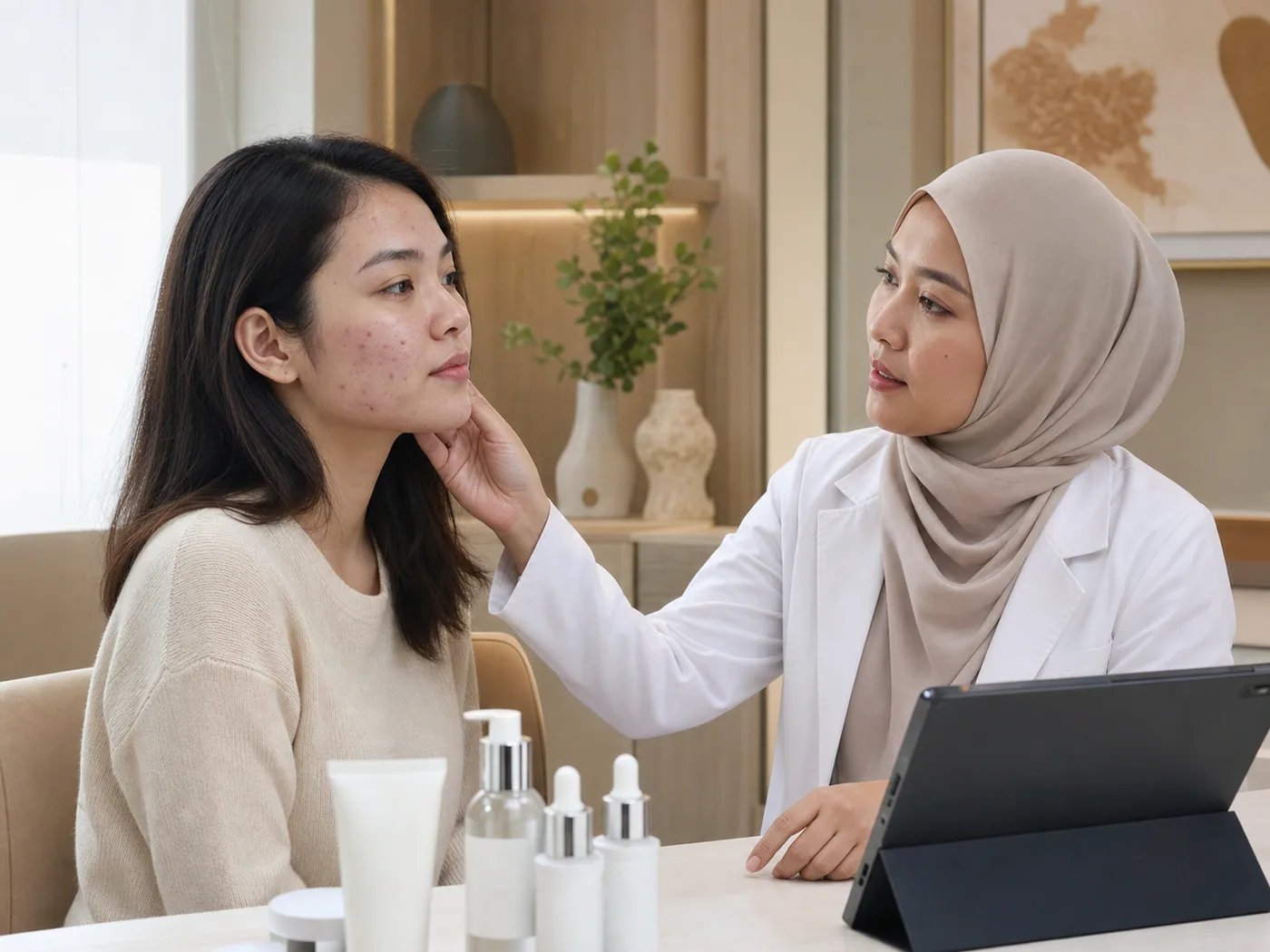
Adult acne uses the same core pathways of follicular plugging, sebum and inflammation, but life-stage factors can change the pattern. Menstrual cycles, pregnancy, contraception changes, perimenopause, stress, occlusive cosmetics, hair products, workplace equipment and some medicines may contribute. Sudden severe acne or other hormonal symptoms may justify broader assessment.
- Persistent acne continues from teenage years without a long clear interval.
- Adult-onset acne first appears later and is commonly reported in women.
- Lower-face and jawline flares may track menstrual cycles in some patients.
- Acne-like bumps caused by dermatitis, folliculitis or medicines require a different diagnosis.
Evidence note: AAD identifies hormone fluctuation, stress, family history and skin or hair products among possible adult-acne contributors; NICE recommends treatment based on severity, preference and individual circumstances. AAD adult acne · AAD acne treatment · AAD hormonal acne · NICE acne guideline · AAD acne skin care
Why assessment comes before treatment
The consultation should map both skin findings and the timeline. Menstrual history and other symptoms may be relevant, but patients should not be labelled with a hormonal disorder from acne location alone.
- Document lesion type, distribution, duration, menstrual or medicine associations where relevant, pain, scarring and the treatments already attempted.
- Review cleanser, moisturiser, sunscreen, makeup and hair products together with prescriptions, supplements, allergies and pregnancy plans where relevant.
- Examine active inflammation, comedones, nodules, pigment, redness, scarring and skin-barrier tolerance instead of treating every mark as active acne.
- Agree on a staged goal, a review interval and signs that should trigger earlier contact or referral.
Assessment is also where the doctor checks current medicines, previous procedures, pregnancy or breastfeeding where relevant, infection risk, wound-healing history, pigment tendency and the amount of recovery time a patient can realistically manage. These factors may change the treatment choice, intensity, sequence or whether treatment should be postponed.
How adult-acne treatment is planned
The plan usually combines effective acne therapy with a routine that the patient can tolerate and sustain.
Comedonal acne
Topical treatment may focus on follicular plugging while moisturiser and gentle cleansing reduce avoidable irritation.
Inflammatory acne
Combination treatment may address inflammation and acne-associated bacteria, with responsible antibiotic use when prescribed.
Possible hormonal influence
Selected women may discuss hormonal treatment after health screening, contraindication review and pregnancy considerations.
Deep or scarring acne
Nodules, cyst-like lesions and ongoing scars may require earlier escalation, stronger prescription treatment or referral.
Benefits, limitations and realistic expectations
Adult acne can improve, but relapse and maintenance are common. A treatment should be used consistently for the advised interval unless a significant reaction occurs. The aim is fewer lesions, less pain and lower scar risk—not permanently eliminating every pore or preventing every isolated breakout.
Potential benefits
- Fewer active lesions and reduced inflammation.
- Lower risk of new scars and post-inflammatory marks.
- A simpler routine that supports treatment adherence.
- Recognition of contributors requiring broader medical discussion.
Important limitations
- No single trigger explains every case of adult acne.
- Hormonal treatment is not suitable for everyone.
- Lifestyle changes alone may not control moderate or severe disease.
- Existing scars need separate assessment after acne control.
No article, photograph or device name can predict an individual result. Meaningful improvement may require a sequence of care, and the safest stopping point may arrive before every visible feature has disappeared.
Safety and who may not be suitable
Prescription retinoids, hormonal treatments and antibiotics have important risks and contraindications. Patients who can become pregnant need specific counselling for medicines that can affect pregnancy.
- Pregnancy, breastfeeding, medicines, allergies and medical conditions can change which acne treatments or procedures are appropriate.
- Active infection, significant dermatitis, open wounds or severe irritation may require treatment before a procedure is considered.
- Skin of colour may develop more persistent post-inflammatory pigmentation after irritation, picking or excessive procedural intensity.
- Prescription medicines should not be started, stopped or shared without assessment and appropriate monitoring.
Seek review for sudden severe acne, deep painful lesions, rapid scarring, signs of infection, a severe medicine reaction, menstrual or androgen-related symptoms that need assessment, or significant anxiety and low mood related to acne.
Preparation, recovery and aftercare
Use the routine recommended with the treatment rather than layering multiple social-media trends. Barrier irritation can make adherence harder and may worsen visible redness or pigment.
- Use a gentle non-alkaline cleanser, suitable moisturiser and non-comedogenic broad-spectrum sunscreen as advised.
- Avoid picking, squeezing, harsh scrubs and repeatedly adding new active ingredients when the skin is irritated.
- Follow medicine and procedure instructions consistently and record any severe or unexpected reaction.
- Attend the planned review before deciding that treatment has failed or adding another high-intensity procedure.
Follow the instructions given for your own treatment rather than copying another patient’s routine. Contact the treating clinic if recovery is more painful, prolonged or unusual than expected.

How this fits into a wider treatment plan
This article supports the acne-treatment pillar by answering why acne occurs in adults. Separate articles address hormonal patterns, barrier care, sunscreen and scar timing without competing for the main local service keyword.
This article supports the Acne Treatment Johor Bahru page. That service page remains the main destination for patients evaluating care in Johor Bahru, while this guide answers the narrower question described above.
Questions to take to your consultation
A good consultation should make the decision clearer even when the answer is not immediate treatment. Ask the doctor to identify the clinical target, explain the strength of evidence and show how your skin tone, medical history and previous response affect the recommendation. The discussion should cover what improvement would be meaningful, what is unlikely to change, what alternatives exist and what would make the doctor postpone or stop treatment.
- What diagnosis or anatomical feature is the treatment intended to address?
- What evidence supports this option for my specific concern and skin type?
- What are the most relevant side effects, complications and warning symptoms?
- How much social and medical downtime should I plan for at the proposed settings?
- How will progress be measured, and when is it reasonable to decide whether another stage is worthwhile?
- What lower-intervention alternative or referral option should I understand before consenting?
Write down the answers or ask for written aftercare. Decisions are safer when the patient understands both the potential benefit and the reasons a treatment may not be recommended.
Questions patients ask
Can acne really start in my thirties?
Yes. Adult-onset acne can begin after adolescence, particularly in women.
Does jawline acne always mean hormones?
No. It can be a clue, but diagnosis needs history and examination.
Can stress cause acne?
Stress can contribute to flares, but it is rarely the only factor.
Can makeup cause adult acne?
Some products can clog follicles or irritate skin; look for non-comedogenic formulations.
Should I stop contraception because of acne?
Do not stop prescribed medicine without discussing risks and alternatives with the prescriber.
Can adult acne scar?
Yes, especially when inflammation is deep, prolonged or picked.
How long before treatment works?
Many regimens need six to twelve weeks for a meaningful review, depending on the treatment.
Are antibiotics always necessary?
No. Treatment depends on severity, and antibiotic use should be limited and combined appropriately when prescribed.
Could it be rosacea instead?
Some acne-like conditions resemble acne, which is why persistent or unusual patterns deserve assessment.
Will treatment be permanent?
Control can be durable, but maintenance and relapse planning are often needed.
Conclusion
Adult acne is common and usually has more than one contributor. A useful plan identifies the lesion pattern, checks hormonal and medicine context where relevant, protects the skin barrier and treats early enough to reduce scarring rather than chasing a single supposed trigger.
Start with a doctor-led assessment
Bring your concern, treatment history, current skincare and questions. Dr Kenneth will explain the suitable options, limitations and next steps without promising a result.
Arrange a consultationReferences
- American Academy of Dermatology: Adult acne
- American Academy of Dermatology: Acne diagnosis and treatment
- American Academy of Dermatology: Hormonal therapy for stubborn acne
- NICE guideline NG198: Acne vulgaris management
- American Academy of Dermatology: Acne skin-care tips
Medical information notice: This article provides general education and does not diagnose a condition or replace an in-person medical assessment. Treatment suitability, benefits, risks, alternatives and recovery vary between individuals.