

Doctor-written skin guide · Johor Bahru
A skin concern deserves doctor-led assessment when it is persistent, worsening, painful, bleeding, changing, leaving scars, affecting wellbeing, failing sensible self-care or being considered for a prescription or procedure. Urgent symptoms require timely medical attention rather than an aesthetic appointment.

Written by Dr Kenneth Lee
Medical Director, Dr Plus Aesthetic Clinic
MBBCh (Cardiff University) · GDipFP Dermatology (NUS) · LCP-certified medical practitioner
Introduction
Many minor skin changes settle with gentle care, but appearance alone cannot always show whether a concern is inflammatory, infectious, pigmentary, structural or potentially serious. A doctor-led assessment becomes important when the pattern is unusual, the diagnosis is uncertain or a treatment could mask symptoms, cause injury or delay appropriate referral.
For patients in Johor Bahru, local relevance should come from practical care: Malaysia’s year-round ultraviolet exposure, heat and humidity can affect sunscreen habits, pigment control and recovery planning. Location does not change the biology of a condition, but it can change how a realistic plan is carried out.
Key takeaways
| Key point | What it means |
|---|---|
| Persistence | A concern that does not settle or repeatedly returns deserves review. |
| Change | Growth, bleeding, colour change or altered borders should not be treated blindly. |
| Scarring | Deep or recurrent inflammation may need earlier control to reduce further damage. |
| Treatment failure | Repeated product changes can irritate skin and obscure the original problem. |
| Urgency | Severe pain, fever, spreading redness or eye involvement needs prompt medical care. |
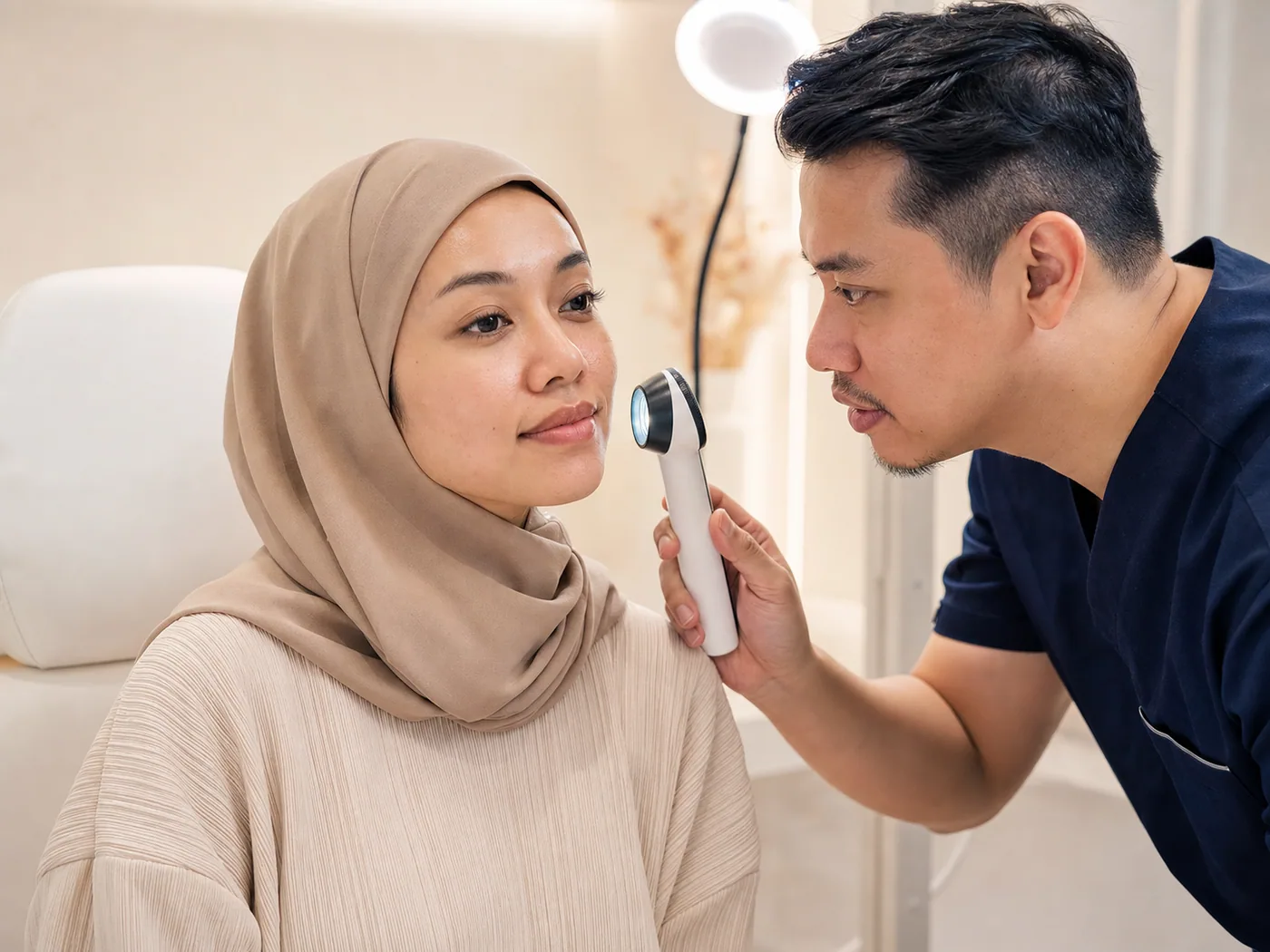
Signals that assessment adds value
The threshold is not simply whether a problem looks severe. Assessment is valuable when the likely diagnosis changes the recommended treatment, when medical history affects safety or when a patient is about to invest in a procedure. A flat pigmented patch, for example, might reflect post-inflammatory pigment, melasma, sun damage, medication or a lesion requiring a different pathway.
- New or evolving lesions, particularly those that bleed or develop irregular features.
- Painful nodules, cysts or recurrent inflammation that is producing scars.
- Rashes with swelling, blistering, fever, mucosal involvement or rapid spread.
- Aesthetic concerns that have not improved despite consistent, appropriate treatment.
Evidence note: NICE recommends referral or specialist input for severe, scarring, diagnostically uncertain or treatment-resistant acne, and DermNet describes careful history and examination as central to pigment diagnosis. NICE acne guideline · AAD acne types · AAD scar guidance · DermNet pigmentation disorders · DermNet PIH
Why assessment comes before treatment
Doctor-led care should combine pattern recognition with history. The assessment asks not only what the skin looks like today, but how it developed and what might make intervention unsafe.
- Define the main concern in the patient’s own words and separate colour, texture, inflammation, volume and laxity rather than treating them as one problem.
- Review when the concern began, how it changes, what has already been tried and whether previous treatment caused irritation, pigment change or prolonged healing.
- Examine the skin in suitable lighting and consider skin tone, sensitivity, active disease, scar tendency and any features that require a different diagnosis or referral.
- Agree on the outcome that would be meaningful, the downtime that is manageable and the risks or trade-offs the patient does not want to accept.
Assessment is also where the doctor checks current medicines, previous procedures, pregnancy or breastfeeding where relevant, infection risk, wound-healing history, pigment tendency and the amount of recovery time a patient can realistically manage. These factors may change the treatment choice, intensity, sequence or whether treatment should be postponed.
Different concerns require different levels of care
Assessment may lead to reassurance, routine care, a procedure, prescription treatment, testing or referral. The correct destination matters more than the label used in a search query.
Inflammatory conditions
Persistent redness, pustules, painful nodules or recurrent flares may need diagnosis and treatment of inflammation before cosmetic correction.
Pigmented changes
A history of acne or irritation may suggest PIH, while symmetrical facial patches may suggest melasma. New or changing isolated lesions require a different level of caution.
Textural and scar concerns
Depressions, raised scars and colour changes are different targets. Scar type, activity and healing history influence which procedures may help.
Urgent or out-of-scope symptoms
Eye symptoms, rapidly spreading infection, systemic illness or suspicion of malignancy requires appropriate medical or hospital care rather than routine aesthetic treatment.
Benefits, limitations and realistic expectations
A doctor-led assessment improves decision quality, but it does not mean every concern has a quick solution. Some conditions are chronic, recurrent or influenced by factors that cannot be removed completely. A safe plan may focus on control, symptom reduction, monitoring and preventing avoidable worsening.
Potential benefits
- Earlier recognition of concerns that need treatment or referral.
- Fewer unnecessary products or procedures aimed at the wrong diagnosis.
- Better explanation of evidence, alternatives and expected course.
- A documented plan for monitoring change and deciding when to escalate.
Important limitations
- Visual examination alone cannot answer every diagnostic question.
- Aesthetic clinics may not provide every test, medicine or specialty referral required.
- Chronic conditions may relapse even after good initial control.
- Remote photographs cannot reliably replace an in-person review for changing lesions.
No article, photograph or device name can predict an individual result. Meaningful improvement may require a sequence of care, and the safest stopping point may arrive before every visible feature has disappeared.
Safety and who may not be suitable
The most important safety decision is recognising when not to proceed with a cosmetic intervention. Treatment that creates heat, wounds or inflammation can worsen an undiagnosed infection, active dermatitis or pigment-prone condition.
- Treatment may need to wait when there is active infection, significant irritation, a recent procedure or uncontrolled inflammation in the intended area.
- Pregnancy, breastfeeding, medicines, allergies, bleeding tendency and previous abnormal scarring should be discussed before a procedure or prescription is selected.
- Darker skin tones can be more prone to post-inflammatory pigment change after irritation, so preparation, treatment intensity and sun protection matter.
- A changing, bleeding or diagnostically uncertain lesion should be medically evaluated instead of being treated as an ordinary cosmetic concern.
Seek urgent care for difficulty breathing, facial or eye swelling, vision changes, fever with a spreading rash, severe blistering, uncontrolled bleeding or rapidly worsening pain. A changing pigmented lesion should be examined promptly rather than covered or lasered.
Preparation, recovery and aftercare
After assessment, follow the level of care advised. Monitoring instructions are still a treatment plan: record change, avoid unnecessary irritation and return sooner if warning features appear.
- Follow the prescribed cleansing, moisturising and sun-protection instructions, keeping the routine simpler while the skin is sensitive.
- Avoid picking, scrubbing, unapproved acids or retinoids and unnecessary heat exposure until the treating clinician advises that they can be resumed.
- Use photographs taken in similar lighting to track gradual change rather than judging the skin repeatedly during temporary redness or swelling.
- Attend the planned review so response, side effects and the need for another stage can be assessed after the skin has had time to settle.
Follow the instructions given for your own treatment rather than copying another patient’s routine. Contact the treating clinic if recovery is more painful, prolonged or unusual than expected.

How this fits into a wider treatment plan
The skin-specialist pillar owns the broader intent of finding doctor-led evaluation in Johor Bahru. This article supports it by answering when that level of assessment becomes appropriate.
This article supports the Skin Specialist Johor Bahru page. That service page remains the main destination for patients evaluating care in Johor Bahru, while this guide answers the narrower question described above.
Questions to take to your consultation
A good consultation should make the decision clearer even when the answer is not immediate treatment. Ask the doctor to identify the clinical target, explain the strength of evidence and show how your skin tone, medical history and previous response affect the recommendation. The discussion should cover what improvement would be meaningful, what is unlikely to change, what alternatives exist and what would make the doctor postpone or stop treatment.
- What diagnosis or anatomical feature is the treatment intended to address?
- What evidence supports this option for my specific concern and skin type?
- What are the most relevant side effects, complications and warning symptoms?
- How much social and medical downtime should I plan for at the proposed settings?
- How will progress be measured, and when is it reasonable to decide whether another stage is worthwhile?
- What lower-intervention alternative or referral option should I understand before consenting?
Write down the answers or ask for written aftercare. Decisions are safer when the patient understands both the potential benefit and the reasons a treatment may not be recommended.
Questions patients ask
Is persistent acne enough reason to see a doctor?
Yes, especially when it is painful, scarring, affecting wellbeing or not improving with appropriate non-prescription care.
Should every mole be checked?
Routine moles do not all need urgent review, but new, changing, bleeding or unusual lesions should be assessed.
Can a doctor tell pigment and scarring apart?
Examination and history usually clarify whether the feature is flat colour, tissue loss, raised tissue or a combination.
When is a rash urgent?
Rapid spread, fever, severe pain, blistering, breathing difficulty, facial swelling or eye involvement needs prompt care.
What if treatment from another clinic failed?
Bring the details. Failure may reflect diagnosis, adherence, treatment strength, timing or a need for another pathway.
Can I send a photo instead?
Photos can help triage and track change, but they may not show depth, texture or diagnostic detail adequately.
Does doctor-led mean I will receive medicine?
No. Advice, observation, a procedure, skincare, testing or referral may be more appropriate.
Can a consultation rule out skin cancer?
Some lesions can be assessed clinically, but uncertain or suspicious lesions may need specialist review or biopsy.
Should I stop all products before assessment?
Do not stop prescribed treatment without advice. Pause and seek help if a product is causing a significant reaction.
Can aesthetic concerns still need medical assessment?
Yes. Cosmetic goals often involve skin disease, anatomy, medicines and procedural risks that require medical judgement.
Conclusion
See a doctor when the concern is persistent, changing, painful, scarring, uncertain or resistant to sensible care—and sooner when warning symptoms occur. Assessment protects patients from receiving a procedure for the wrong problem and creates a clearer route toward treatment, monitoring or referral.
Start with a doctor-led assessment
Bring your concern, treatment history, current skincare and questions. Dr Kenneth will explain the suitable options, limitations and next steps without promising a result.
Arrange a consultationReferences
- NICE guideline NG198: Acne vulgaris management
- American Academy of Dermatology: How to treat different types of acne
- American Academy of Dermatology: Acne scar consultation and treatment
- DermNet: Pigmentation disorders
- DermNet: Postinflammatory hyperpigmentation
Medical information notice: This article provides general education and does not diagnose a condition or replace an in-person medical assessment. Treatment suitability, benefits, risks, alternatives and recovery vary between individuals.