
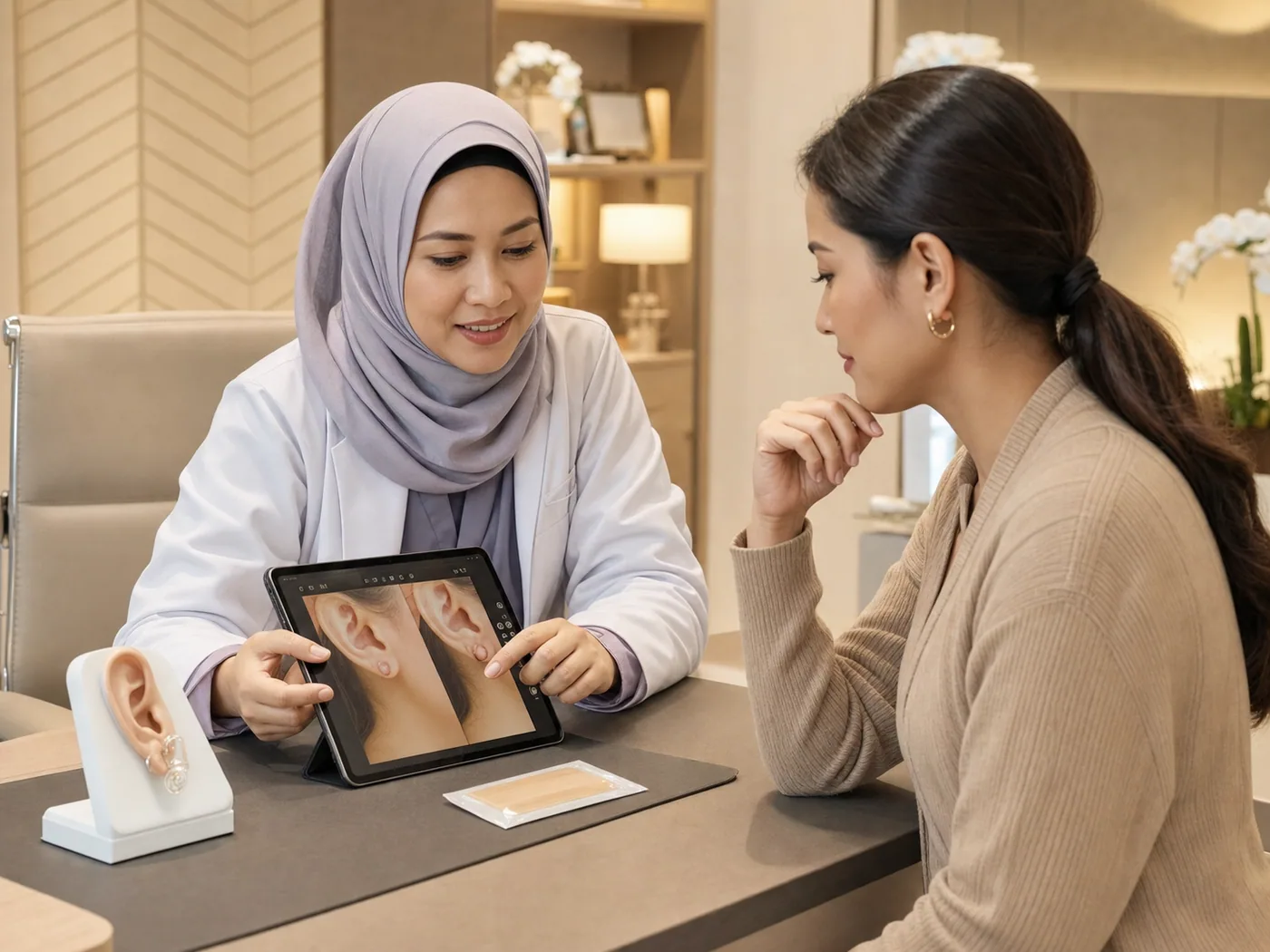
Piercing-related scars
A raised scar has formed on the earlobe or ear cartilage after piercing.
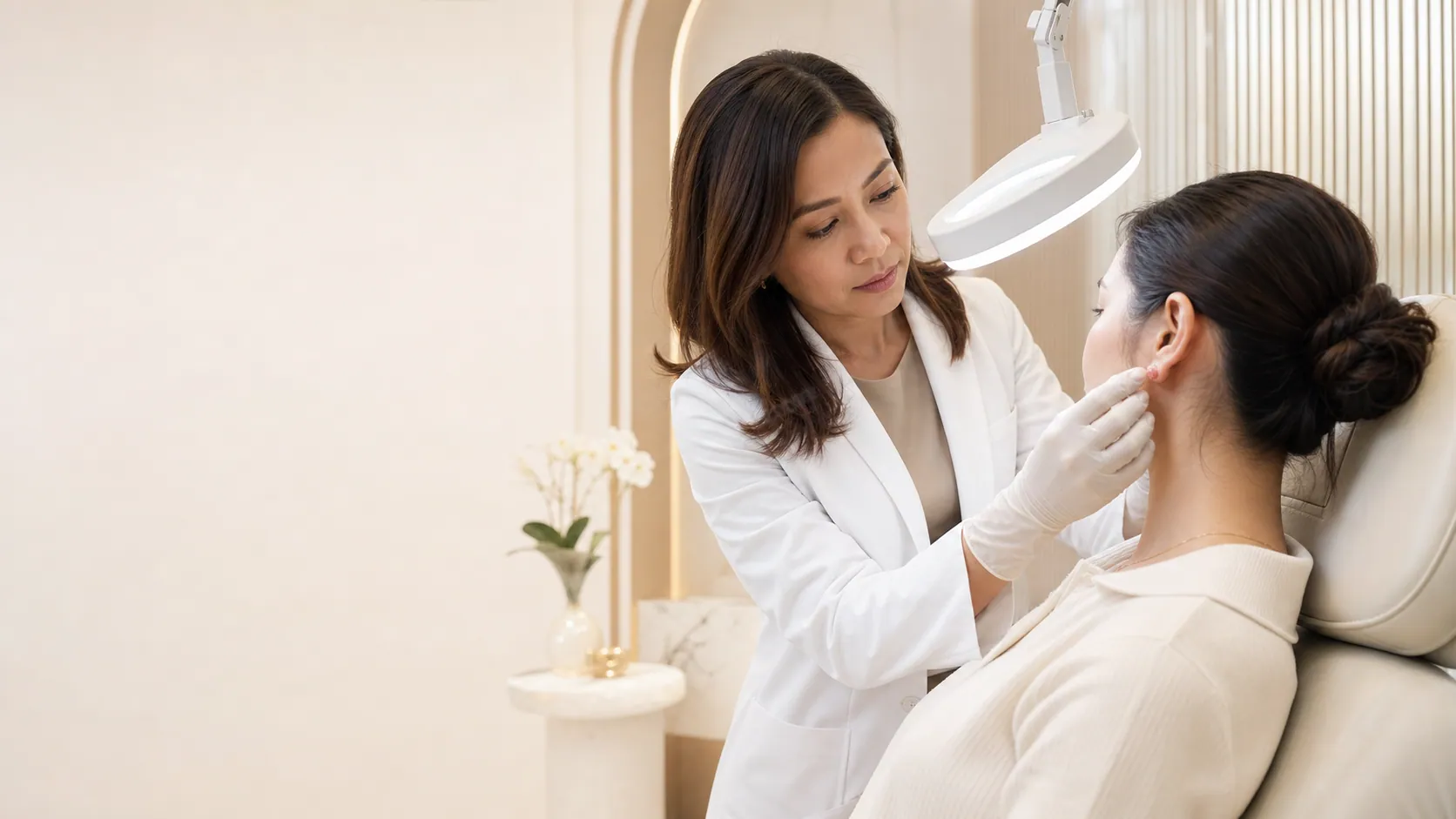
Ear keloid removal Johor Bahru · recurrence-aware care
Ear keloid removal Johor Bahru consultations at Dr Plus assess the scar, piercing history, symptoms and previous treatment before planning a combination approach.
ear keloid removal Johor Bahru
Ear keloids can develop after piercing, surgery, trauma or inflammation and may become firm, itchy, painful or progressively larger. Removing a keloid surgically without additional treatment carries a high risk of recurrence, so the doctor first reviews growth pattern, skin tone, location and previous response.
A plan may involve injections, pressure therapy, silicone, selected laser or freezing treatment, surgery with adjunctive care, or a staged combination. No method can guarantee permanent removal, and long-term monitoring may be needed.
Who this may suit
These examples are starting points, not a diagnosis. Suitability is confirmed after medical assessment.
A raised scar has formed on the earlobe or ear cartilage after piercing.
The ear keloid is tender, itchy, tight or repeatedly irritated.
The scar extends beyond the original wound and has become more noticeable.
A previously injected, frozen or removed ear keloid has returned.
Consultation pathway
Treatment is selected according to size, attachment, location and recurrence history rather than assuming every ear keloid should be removed surgically.
Review the trigger, growth, symptoms, attachment and previous treatment response.
Explain why ear keloids can return and how combination care may reduce risk.
Consider injections, pressure, silicone, energy treatment, surgery or referral.
Review flattening, symptoms, pigment, wound healing and early regrowth.
Treatment planning
The goal may be to reduce height, hardness, itch or pain rather than promise complete and permanent disappearance.
Medication injected into the scar may soften and flatten selected keloids over a course.
Pressure earrings or silicone may support selected plans when used consistently.
Excision may be considered for selected ear keloids but usually needs recurrence-reduction care.
Early thickening or renewed symptoms should be reviewed rather than waiting for major regrowth.

Doctor-led care
Dr Kenneth Lee plans ear keloid care around recurrence risk and the likely trade-off between the existing scar and a new surgical wound. Results vary, and repeat or combination treatment may be needed.
Questions patients ask
Permanent removal cannot be guaranteed. Ear keloids can recur, particularly after surgery without additional treatment.
Medication injections are commonly used to soften and flatten selected keloids, often over several sessions.
Pressure earrings may help reduce recurrence risk in selected earlobe keloids, but they require consistent use and correct fitting.
Yes. Excision creates a new wound, which is why scar planning and follow-up are important.
That depends on inflammation, location and the treatment plan. The doctor will advise after examination.
Continue exploring
Read the pages most closely connected to this concern, or start with a consultation if you are unsure which applies.
Medical note
Information on this page is general and does not replace medical advice. Benefits, risks, alternatives, downtime and expected outcomes are discussed after assessment. No result can be guaranteed.
Dr Plus · Eko Botani