
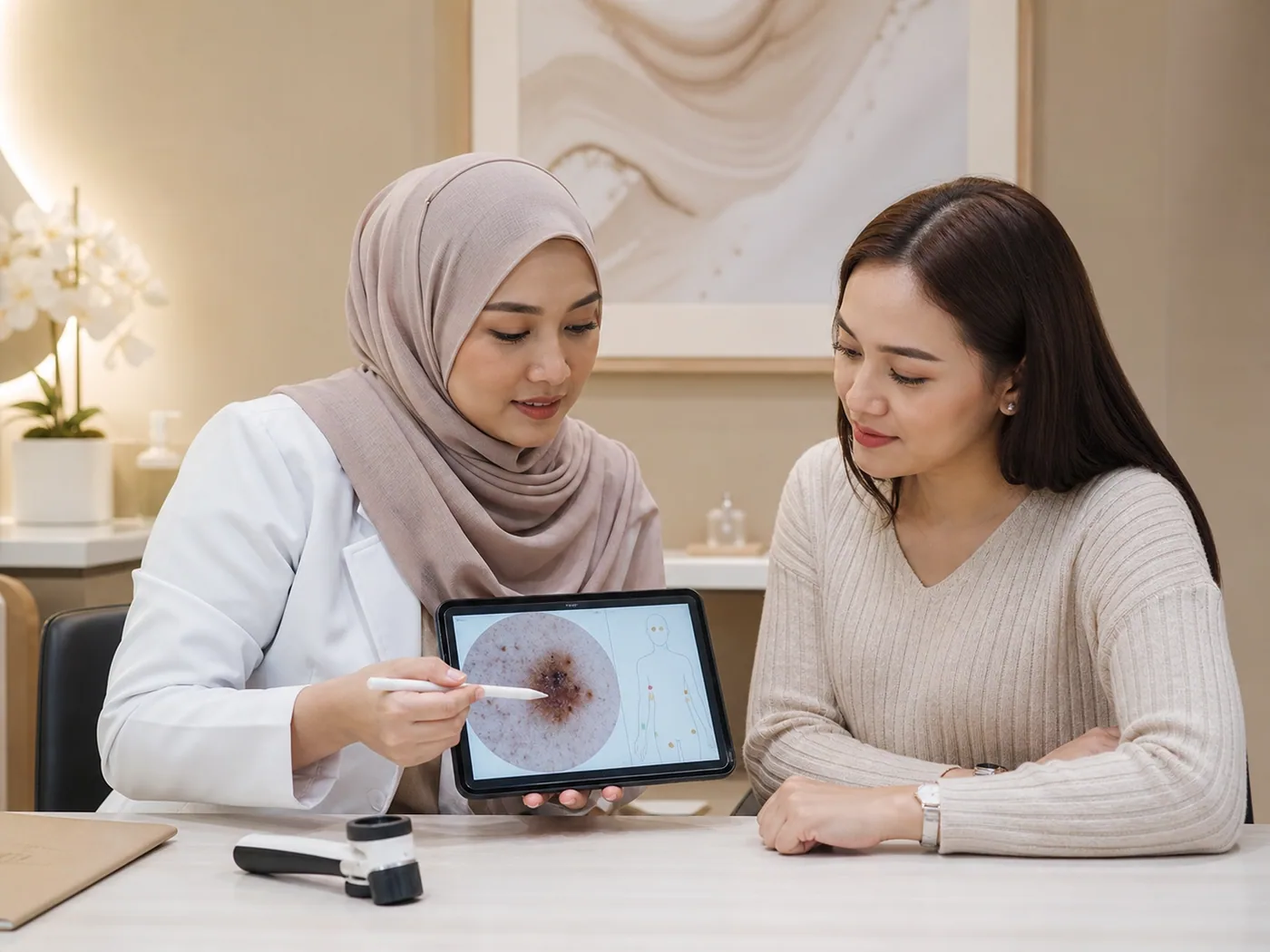
Raised moles
A longstanding raised lesion catches on clothing, shaving or jewellery.
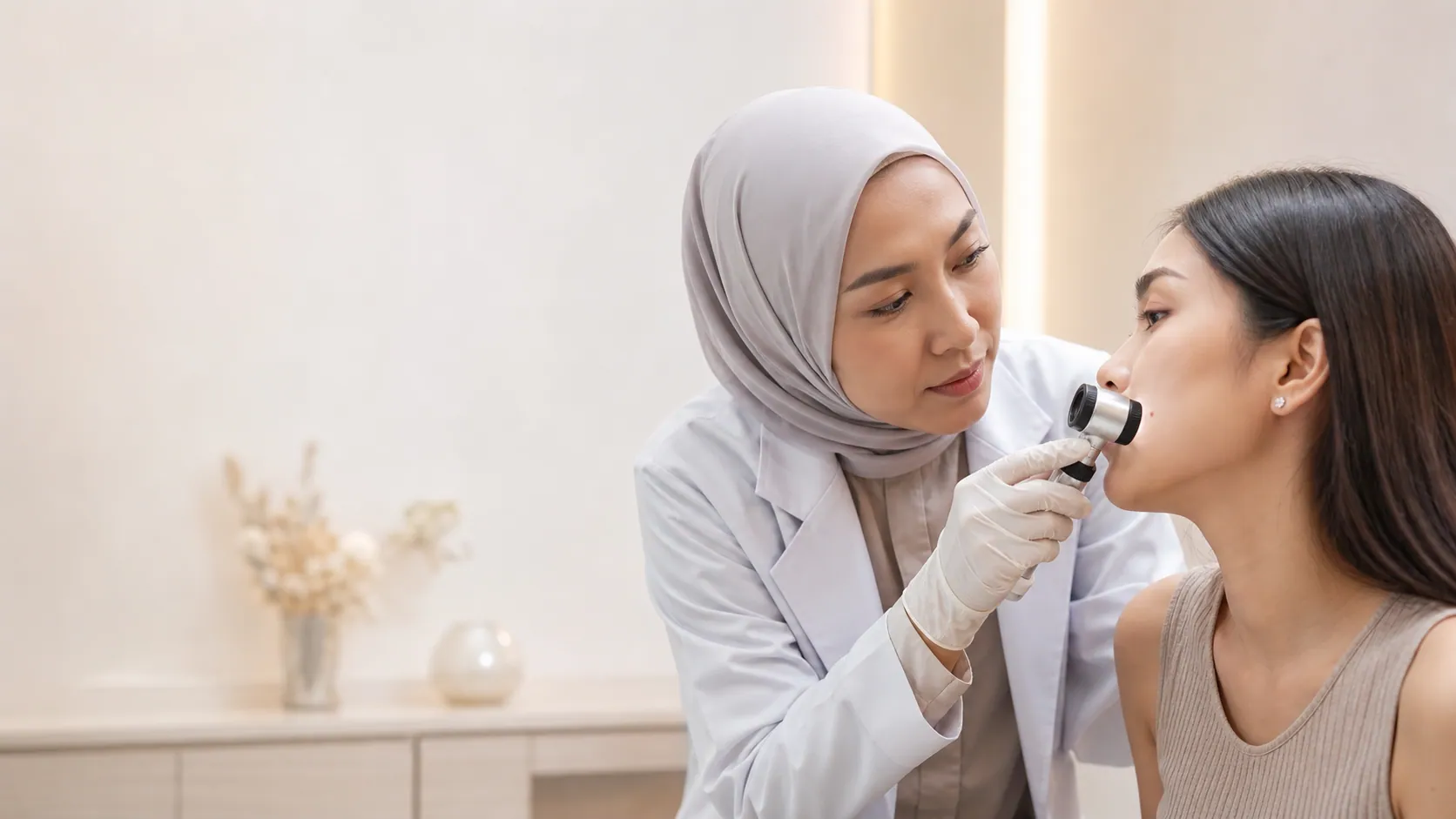
Mole removal Johor Bahru · assess before removing
Mole removal Johor Bahru consultations at Dr Plus begin with examination of the lesion, changes, symptoms and scar risk before cosmetic treatment is considered.
mole removal Johor Bahru
Most moles are benign, but a new or changing lesion can require further medical assessment. Growth, asymmetry, irregular borders, varied colour, itching, bleeding or persistent change should not be treated as a simple cosmetic spot without examination.
Dr Kenneth Lee reviews the mole’s history, location, depth and appearance, along with medication, healing and keloid tendency. Some lesions may be suitable for in-clinic removal, while suspicious or uncertain lesions may require referral, excision or laboratory examination instead of cosmetic ablation.
Who this may suit
These examples are starting points, not a diagnosis. Suitability is confirmed after medical assessment.
A longstanding raised lesion catches on clothing, shaving or jewellery.
A stable flat lesion is being considered for cosmetic assessment.
You want to understand the likely scar and method before removal.
Growth, colour change, itching or bleeding needs diagnostic assessment first.
Consultation pathway
The priority is to identify lesions that should not be treated cosmetically before discussing the method and likely scar.
Review duration, change, symptoms, sun exposure and family or personal history.
Determine whether cosmetic removal, biopsy, excision or specialist referral is appropriate.
Compare the lesion with the likely mark, wound care and recurrence risk.
Monitor infection, bleeding, pigment change, scar formation and laboratory results if taken.
Treatment planning
No method is scar-free. The best option depends on whether the lesion is raised or flat, how deep it extends and whether tissue should be examined.
Changing or uncertain lesions require an appropriate diagnostic route before removal.
Selected raised benign-looking lesions may be removed at surface level after assessment.
Deeper or diagnostically important lesions may require complete removal and stitches.
Healing is monitored for infection, bleeding, pigment change and raised scarring.

Doctor-led care
Dr Kenneth Lee will not treat a suspicious lesion as a routine cosmetic mark. When the diagnosis or required procedure falls outside the clinic’s scope, appropriate referral is recommended.
Questions patients ask
No. Most moles do not need treatment. Removal may be considered for irritation, appearance or diagnostic reasons.
Every removal creates a wound and can leave a mark. The expected scar depends on depth, location, method and healing.
Seek medical assessment for a new or changing lesion, especially growth, asymmetry, irregular borders, varied colour, itching or bleeding.
Recurrence is possible if mole cells remain, particularly after superficial removal. The doctor will explain the trade-off.
No. DIY products can cause burns, infection, scarring and delay the diagnosis of skin cancer.
Continue exploring
Read the pages most closely connected to this concern, or start with a consultation if you are unsure which applies.
Medical note
Information on this page is general and does not replace medical advice. Benefits, risks, alternatives, downtime and expected outcomes are discussed after assessment. No result can be guaranteed.
Dr Plus · Eko Botani