
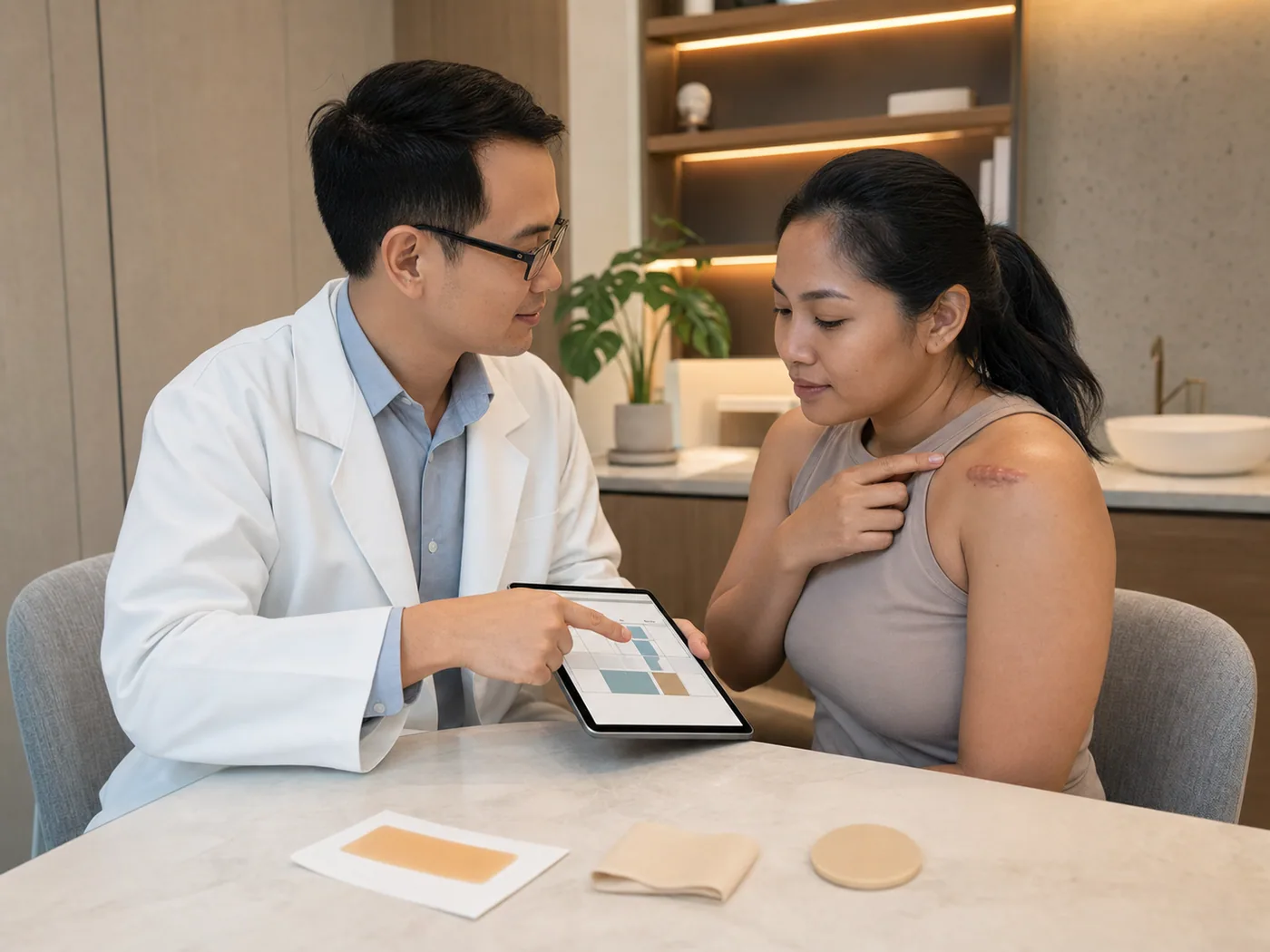
Growing raised scars
The scar extends beyond the original wound, piercing, acne lesion or surgery.

Keloid treatment Johor Bahru · recurrence-aware care
Keloid treatment Johor Bahru consultations at Dr Plus assess scar growth, symptoms, location, skin tone and previous treatment before discussing a combined plan.
keloid treatment Johor Bahru
A keloid is a raised scar that grows beyond the boundary of the original injury. It may feel firm, itchy, tender or painful, and it can recur after treatment. A hypertrophic scar stays within the original wound and may behave differently, so diagnosis matters before treatment.
Dr Kenneth Lee reviews the trigger, growth timeline, symptoms, previous injections or surgery and the patient’s tendency to form raised scars. The aim may be to reduce symptoms, soften and flatten the scar, improve colour or limit further growth; complete permanent removal cannot be guaranteed.
Who this may suit
These examples are starting points, not a diagnosis. Suitability is confirmed after medical assessment.
The scar extends beyond the original wound, piercing, acne lesion or surgery.
Tenderness, itch, tightness or irritation affects comfort or daily activity.
A scar has returned after injection, surgery, laser or another treatment.
You have a strong keloid history and are considering another skin procedure.
Consultation pathway
Keloids often respond best to a combination and follow-up plan rather than a one-time removal procedure.
Distinguish keloid, hypertrophic scar and other growths; biopsy or referral may be needed.
Prioritise pain, itch, size, firmness, colour, movement or appearance.
Discuss injections, silicone, pressure, laser or procedural options where appropriate.
Review the scar over time and adjust treatment if it becomes active again.
Treatment planning
Treatment choice depends on scar size, site, symptoms and previous response. Surgery alone has a high recurrence risk and is not automatically the first option.
Medication injected into selected keloids may help soften, flatten and relieve symptoms.
Consistent use may support selected new or treated scars.
Selected lasers may target colour or thickness as part of combination care.
Excision may require additional measures to reduce recurrence risk.

Doctor-led care
Dr Kenneth Lee discusses what treatment can realistically achieve and the chance that a keloid may return. The plan may require repeated visits, and some scars are referred for specialist or multidisciplinary care.
Questions patients ask
No treatment can guarantee permanent removal. Keloids can recur, so combination treatment and follow-up may be recommended.
No. A keloid grows beyond the original injury, while a hypertrophic scar usually remains within it.
Temporary discomfort can occur. The clinic will explain comfort measures and expected effects before treatment.
Creating another wound can trigger new scar growth. Surgery may need additional preventive treatment and close follow-up.
Seek assessment if it is growing, painful, itchy, bleeding, restricting movement or if the diagnosis is uncertain.
Continue exploring
Read the pages most closely connected to this concern, or start with a consultation if you are unsure which applies.
Medical note
Information on this page is general and does not replace medical advice. Benefits, risks, alternatives, downtime and expected outcomes are discussed after assessment. No result can be guaranteed.
Dr Plus · Eko Botani